Home

.

dipue
2 المشاهدات · منذ 25 أيام

金瓜石關公節勸濟堂
優人神鼓以「先學靜坐,再教擊鼓」是台灣一個表演藝術團體,前身為優劇場,1988年由創辦人劉若瑀於木柵老泉山創立,1993年黃誌群加入擔任擊鼓指導,成為優人神鼓。【版權所有,未經授權,嚴禁任何形式之使用】歡迎分享影片連結以及訂閱本頻道:更多影片資訊、照片分享,歡迎連結(AngelAeroCam空中攝影臉書專頁)https://www.facebook.com/AngelAeroCam/

dipue
2 المشاهدات · منذ 25 أيام

China es un gran país que no solo tiene una extensa población sino también tiene 56 etnias con una predominante que es la Han que alcanza el 92% del total de la población. Las otras 55 se dividen entre unos cien millones de personas.
En este programa veremos algunas expresiones musicales de las etinias chinas.
MUY INTERESANTE!!

dipue
2 المشاهدات · منذ 25 أيام

powerful playing, excellent musicality - dramatic and emotional: "The Ambush from all sides" (中国传统音乐经典琵琶名曲 《十面埋伏》), is undoubtedly the most famous pipa master piece from the Chinese traditional repertoire, performed by virtuoso soloist Liu Fang (劉芳)during a solo recital in the Pierre-Mercurre Hall of the Centre Pierre-Peladeau, on March 27, 2002, in Montreal, recorded by Mr. Zhou Fan of Montreal Multi-cultural TV, Chinese chanel.

Pipa is a Chinese traditional music instrument with over 2000 years of history. The "Ambush from ten side" is one of the most famous classical instrumental music of China.
With its highly virtuoso programmatic effects and tremendous power, this piece is regarded as the most representative of the "martial repertoire" of classical pipa solo. It describes the glorious victory of Liu Bang over Xiang Yu in 202 BC, the same theme as "The King doffs his Armour", however, from a totally different view point. There is no information about the composer, but some researches indicate that this piece might be dated back as early as the Chinese Tang Dynasty (618-917AD).

L'Embuscade (tradition classique) -
Cette pièce très ancienne, considérée comme emblématique de la musique du répertoire martial wu pour pipa, décrit la victoire de larmée Han de Liu Bang sur Xiang Yu en 202 avant J-C. Il sagit de lépisode historique qui fait suite à la pièce épique Bawang xiejia « Le Roi de Chu se défait de son armure » : on assiste maintenant à laffrontement des deux armées et à la bataille. Le pipa, ici dans son rôle dinstrument daccompagnement dun récit épique, évoque, par des accords et bruitages particuliers, le heurt des épées, le choc des cuirasses, la mêlée des chevaux, les cris et clameurs des combattants, etc. Linterprétation exige une grande virtuosité et une maîtrise des techniques de jeu liées à ce répertoire épique, plein deffets sonores spéciaux.

música china instrumental de la tradición clásica para solistas pipa: estilo marcial - que describe la guerra y las escenas dramáticas, potente y elegante con las técnicas de virtuoso. Esto está en contraste con el estilo lírico (o de carácter civil), del repertorio tradicional para solo de pipa. Pipa es conocida como laúd chino o guitarra.

More information about Chinese traditional music / Sur la musique traditionnelle chinoise: http://www.philmultic.com/Engl....ish/Chinese_music.ht

Traditionelle Chinesische Musik: http://www.philmultic.com/German/chinesische_musik.htm"The ambush from ten sides" (klassisch traditionell)
Mit seinen höchst virtuosen programmatischen Effekten und der enormen Kraft wird dieses Solostück als das repräsentativste des „martialischen Repertoires" für die Pipa angesehen. Es beschreibt den glorreichen Sieg von Liu Bang über Xiang Yu im Jahr 202 v.u.Z. -- das gleiche Thema wie in „The King doffs his Armour", wenngleich von einem komplett anderen Standpunkt.

Китайской традиционной музыки: Классический шедевр "Засада" (十面埋伏 ). Пипа (Китайский гитарное) соло. Солист: Лю Фан.
Пипа традиционный струнный инструмент, известный как китайский гитаре или лютне.

tradiční čínská hudba pro čínskou loutnu sólo

tradycyjnej chińskiej muzyki chińskiej lutni lub gitarze

中国传统音乐琵琶名曲 - 經典琵琶獨奏曲傳統古曲《十面埋伏》。
琵琶演奏家劉芳獨奏音樂會現場錄像。

中国の伝統音楽のソロコンサート、琵琶独奏:劉芳 (リュウ・ファン)

dipue
8 المشاهدات · منذ 25 أيام

Performed by Yu Hongmei 于红梅

Yu Hongmei's Offical Website - http://yuhongmei.com/

Associate Professor of Department of Traditional Chinese Music, the Central Conservatory of Music (CCM); Guest Soloist of the China Central Chinese Orchestra; Guest Professor at the University of Calgary, Canada.

Yu Hongmei began her erhu study at the age of eight, and she studied at the Attached High School of the ChinaCentral Music University and then the China Central Music University where she earned her Bachelor's and Master's degree. At the university she was taught by professors including Zhang Shao, Su Anguo, Lan Yusong and Liu Changfu; she also learned Banhu, Gaohu, Jinghu, Zhuihu and other national musical instruments with some masters.
 
She won the "Pro Musicis International Award" in New York City. Her album A Collection of Erhu Concertos of Yu Hong Mei was given the 4th China Golden Record Award. She was also the first Chinese musician to receive the coveted Indie Award in the category of "Best Traditional World Music" for the CD entitled String Glamour. Another solo CD, Red Plum Blossom Capriccio, won the Best Chinese Musical Art Production. In 2002 she gave a successful solo concert in the world's most prestigious concert hall, Carnage Hall in New York where she played as the first Chinese traditional instrument performer. In 2005 she also received the First Prize of "Outstanding Young Teachers" of the Fok Ying Tung Education Foundation.

As a soloist she visited many countries and regions in Europe, America, Africa and Asia and gave more than 100 personal solo concerts. She debuted some outstanding music pieces including the Second Erhu Concerto -- After the Dream of the Capital, Ba Que and Xi Kou Ballad. Many of the important music activities she has attended are the Spring of Prague Musical Festival, the Chinese Art Festival, the Beijing International Music Festival, the Shanghai International Music Festival, the German Music Festival and the Macao Art Festival. She published 14 solo albums.

Yu Hongmei gives out a genuine feeling in her performance which is full of subtle emotions and passionate. She can perfectly interpret the music by incorporating her unique understanding in the performance and is therefore noted as "a performer representing the modern Chinese music and cultural spirit" by the New York Concert Magazine. She also works with the international composers and performers in performing many modern music works. She founded the "Qing MeJing Yue" Chinese Traditional Chamber Music Orchestra for the development and innovation of the modern national string music.

INFO : http://www.chncpa.org/n457779/....n457834/n516566/3910

dipue
2 المشاهدات · منذ 25 أيام

This traditional piece, 綠野仙蹤, is inspired by a tragic romantic fable in Chinese culture - the story of Lian Hua. (See below to read full story)

Xiao solo with piano, composed by 赵聪, arranged by 陈悦.

The beauty of the instrument:
The instrument I played this piece on is called the Xiao (箫), which is one of my favorite traditional Chinese instruments. With over 8,000 years of history, the Xiao's beauty and simplicity has stayed much the same since ancient times. Made from bamboo, it possesses a unique mellow tone that can carry incredibly deep emotions. I hope this music touches you as deeply as it does me, and hope that you enjoy my performance!


The tragic story of Lian Hua:
The story behind the song is that from ancient China and of a beautiful Chinese girl, Lian Hua, or Lotus Blossom, who at 12 summers, was kidnapped by another clan. It was the Chinese ambassador's son, Chin Win, who was much older and had first lay eyes on her while she traveled with her family to his lands in the east to trade. Lian’s father, Cho, a musician and instrument maker, had traveled there to sell the flutes and ruans he crafted, in the Great Emperors court.

Upon her return home, Chin ordered a faction of the Great Emperors army to escort Lian Hua and her family back to their lands in the west. As honored as Lian's family was for the kind gesture, little did they know Chin's real motive. By sunrise Lian had vanished and was nowhere in sight. Under the cover of night a few of Chin’s men gagged and tied her and rode away eastward.

For days her family searched and mourned for Lian Hua with the help of Chin's men, who only pretended to help, as they knew all too well of her disappearance. Not fully knowing what happened to Lian Hua, they feared she was dead – and with that, many years passed. In those years, Lian Hua had grown more beautiful than when she first arrived to the house of Chin.

Chin tried for many years to win the love of Lian Hua, but knowing of her abduction, she rejected him and thought only of her family and the lands to the west she so desperately missed. Chin grew frustrated with Lian Hua and imprisoned her as punishment. Chin so loved Lian Hua but her affection he could not have. As such, he became embittered and drank heavily and with Lian Hua being held captive, he visited her one night, drunk and furious.

"I bring you to this land in the hopes of making a better life for you and making you my wife and yet – you are ungrateful!" Chin said furiously while reaching for his knife as if to strike her. Lian Hua, chained to the ground below slowly looked up at Chin. Her beautiful face radiated with the light of the fool moon shining through the window.

“Wait!” Lian cried. "Know now that I came here captured by your will. My home, my family is beyond the mountains to the west, not here with you! Yet you imprison me like a caged bird so that I may someday love you.”

Chin raised his head higher still holding his knife as Lian Hua went on:
“It is you, Chin, who is a prisoner among yourself. For as long as I am held here, I will never love you… never.” Tears swelled her eyes. It was these very words that Lian Hua spoke that further enraged Chin.

“Then if you can never love me, no one ever will!” With that, Chin took his knife and cut the right side of Lian’s beautiful face. A struggle ensued as Chin tried to have his way with Lian Hua. She tried desperately to fight him off – only to feel the blade of his knife strike her in the chest. In her struggle, Lian Hua let out a gasp and slowly fell to the ground.

That same night Lian Hua’s mother Mei awoke from a dream she had. In her dream, she heard Lian Hua call to her and felt she was near. Mei rose and went outside and looked around calling to her daughter.
“Lian Hua, Lian Hua, where are you?” She cried running, looking. “I am here my beautiful daughter, I am here.” The old woman cried. Now exhausted she fell to her knees weeping.

Then, realizing it was just a dream, she looked up to the heavens and prayed to the spirits for acting foolish. To her amazement, Mei noticed a shooting star flying westward leaving a slight glimmering trail that slowly dissipated in the sky above her. In old China, this is known as “A Trail of Angels.” Somehow, Lian Hua’s mother knew that her daughter had returned to her that night but was now in the spirit world. Revealing this dream to Cho the next day, Cho picked up a flute and played this very song to the memory of Lian Hua – a lotus that forever blossoms.

Story credits: Johan Rohas' comment on "Beautiful Chinese Music – Bamboo Flute"

dipue
4 المشاهدات · منذ 25 أيام

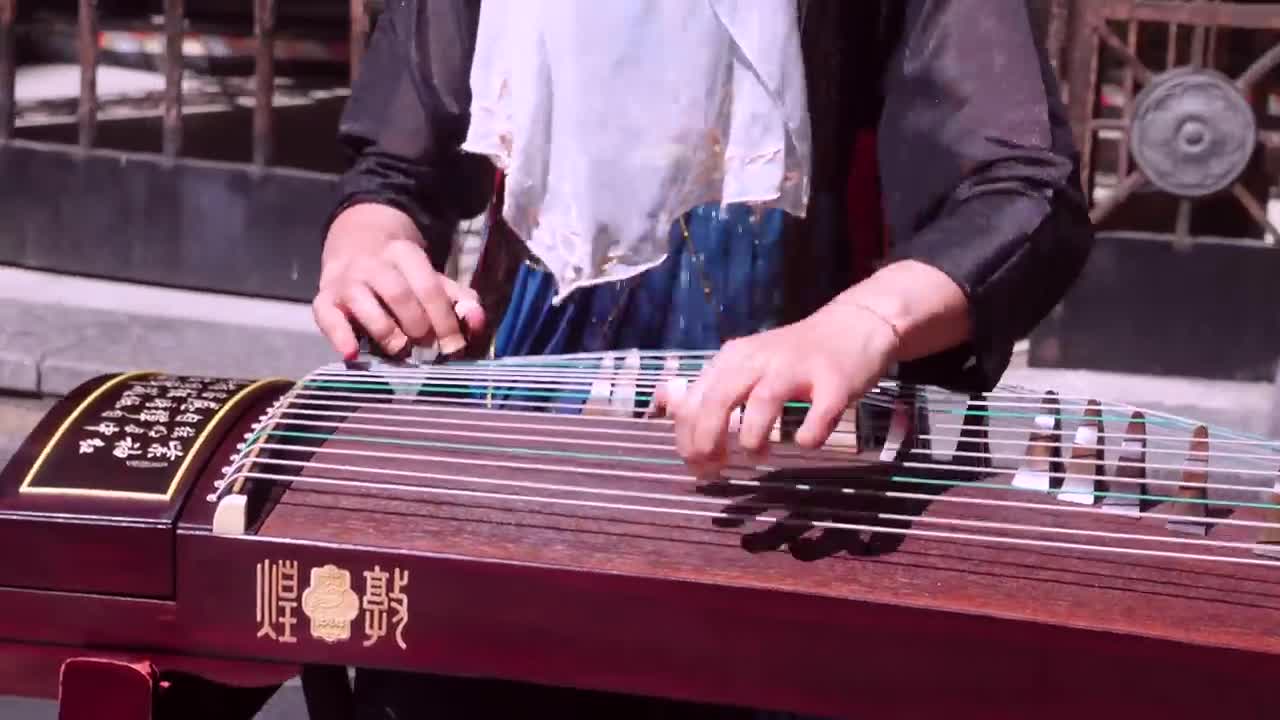
Guzheng Solo Performance "Spring River Flower Moon Night"
古筝 - 春江花月夜

Performed by Carol Chang from Sound of China Guzheng Ensemble

This instrument is called "guzheng" or gu zheng. This is one of my favorite guzheng song. I hope you enjoy it as much as I do. Thank you for viewing! I played this clip in my practice session. Sorry for the background noise.

If you like this music, it's available on spotify and other major streaming platforms.
is now available on Spotify and all major streaming platforms.
https://distrokid.com/hyperfol....low/carolchang/sprin

If you like this arrangement, the music score can be purchased at the Sound of China Guzheng Music page on mymusicsheet 點下面的連接可以購買曲譜:
https://www.mymusicsheet.com/S....oundofChinaGuzheng/1

Like my page on Facebook: https://www.facebook.com/SoundofChina
V
If you want to find out more about this instrument, please visit:
https://www.chinesezither.net/

dipue
5 المشاهدات · منذ 25 أيام

《左手指月》
作曲:萨顶顶
古筝改编/演奏:崔江卉

说明
曲谱请关注微信公众号:崔江卉古筝。b站/微博/网易云音乐:崔江卉。

For more music scores and tutorials, please follow the WeChat official account "崔江卉古筝"
Or Contact me on the Line.My Line id is "cuijianghui"

如果你有关于曲谱和古筝的问题,请参考我的频道社区的第一个帖子:
https://www.youtube.com/channe....l/UCgSka45cKySJLaqPh

If you have questions about sheet music and guzheng, please refer to the first post of my channel community:
https://www.youtube.com/channe....l/UCgSka45cKySJLaqPh

You will get more videos or music on

Bilibili: https://space.bilibili.com/25617687?from=search&seid=191023623888172396

Sina Weibo:https://www.weibo.com/u/3920676570

NetEase Music :https://music.163.com/#/artist?id=28416508

dipue
3 المشاهدات · منذ 25 أيام

Godlike I go BOOOM!
Hope you enjoy this very Han Chinese styled music.
Original Song: 權御天下(洛天依) - https://youtu.be/LJms1CGHjn8

Credits:
Music: 乌龟sui
Guzheng/PV/Mixing - 墨韵随步摇
Percussion - 司鼓君
Chinese calligraphy: 愚是知
Art Director: 小甫哥
Mixing Director: 天音之旋
Costum: 汉服Hanfu - 对襟襦裙

Reprint from bilibili: http://www.bilibili.com/video/av2188740/
墨韵weibo: http://weibo.com/u/2616755905?....refer_flag=100103010

墨韵:《权御天下》筝鼓合奏版(又名《墨韵第二号古筝练习曲》233)该来的终于来了!久等!这次的作品有着空前的合作阵容,多数是幕后的,但都为之付出了很多心血,参与拍摄的除了司鼓君都不是专业人士,还请多指教。此曲古筝部分的改编力度很大,因为我想尽量呈现一个丰富而有层次的演奏,开头致敬经典筝鼓合奏曲目——常静大神的《篆音》。感谢作者乌龟的授权,希望大家能喜欢!【UP主着装:对襟襦裙加半臂,请勿掐架】