
Foreign Direct Investment (FDI) in China has shifted dramatically in recent years, reflecting both global economic uncertainty and China’s evolving role in international commerce. While inflows have declined since their peak, China remains a critical destination for investors in advanced manufacturing, green energy, and digital industries.
Foreign Direct Investment in China: Trends and Impacts
Recent Trends
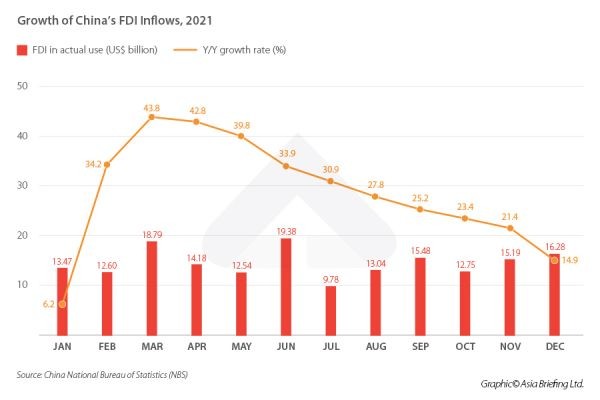
Peak and Decline: FDI into China reached a record high of USD 344.1 billion in 2021, but has since declined for three consecutive years, dropping to just USD 4.5 billion in 2024, the lowest level in decades.
Sectoral Shifts: Traditional manufacturing investments have slowed, while high-tech, renewable energy, and services sectors continue to attract foreign capital.
Policy Uncertainty: Analysts highlight that geopolitical tensions, regulatory changes, and slower growth prospects are key drivers of reduced inflows.
Outward FDI Stability: While inward FDI has weakened, China’s outward FDI remains stable, with diversification into Africa, Latin America, and Europe.
Impacts on China’s Economy
Industrial Upgrading: FDI has historically fueled China’s transformation from low-cost manufacturing to high-tech production and innovation hubs.
Employment and Growth: Foreign enterprises contribute significantly to job creation and GDP growth, especially in export-oriented industries.
Technology Transfer: Partnerships with multinational firms have accelerated knowledge transfer, boosting China’s competitiveness in areas like semiconductors and AI.
Regional Development: FDI has supported the rise of Special Economic Zones (SEZs) such as Shenzhen, turning them into global innovation centers.
Challenges and Risks
Geopolitical Tensions: Trade disputes and restrictions on technology exports (e.g., semiconductors) limit investor confidence.
Debt and Overcapacity: Some sectors face risks of overinvestment, leading to inefficiencies.
Diversification Pressure: Multinational firms are adopting “China+1” strategies, expanding to other Asian countries to reduce reliance on China.
Opportunities Ahead
Green Investment: China’s push for renewable energy and carbon neutrality offers new opportunities for foreign investors.
Digital Economy: E-commerce, fintech, and AI remain attractive sectors for global capital.
Regional Integration: Initiatives like the Belt and Road continue to expand China’s trade and investment networks, creating new FDI corridors.
Conclusion
FDI in China is undergoing a strategic transformation. While inflows have declined due to global uncertainty and geopolitical tensions, China’s strengths in innovation, green energy, and digital industries ensure it remains a vital player in global investment flows. The future of FDI in China will depend on how effectively it balances policy stability, sustainability, and openness to foreign enterprises.