
From Silk Road to Shipping Routes: The Evolution of China’s Global Trade
The Ancient Silk Road
More than 2,000 years ago, China’s Silk Road connected East Asia with Central Asia, the Middle East, and Europe.
Silk, porcelain, tea, and paper traveled westward, while spices, precious metals, and glassware came eastward.
This wasn’t just about goods—it was a cultural highway, spreading ideas, religions, and technologies across continents.
Maritime Expansion
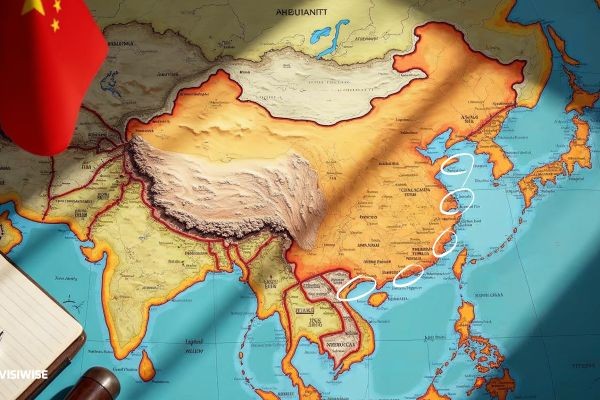
By the Tang and Song dynasties, China expanded trade through maritime routes, linking Southeast Asia, India, and the Arabian Peninsula.
Ports like Guangzhou became bustling hubs of international commerce.
The Ming dynasty’s famous explorer Zheng He led massive naval expeditions, showcasing China’s maritime power and opening new trade connections.
Colonial Encounters & Modernization
In the 19th century, China’s trade was reshaped by colonial powers and the Opium Wars, which forced open ports and altered trade balances.
The late Qing dynasty and early Republic era saw modernization efforts, with railways and industrialization beginning to integrate China into global markets.
Post-1949 Shifts
After the founding of the People’s Republic of China in 1949, trade was initially limited due to political isolation.
By the late 1970s, Deng Xiaoping’s reforms opened China to global commerce, creating Special Economic Zones (SEZs) like Shenzhen.
China rapidly became the “world’s factory”, exporting manufactured goods worldwide.
Modern Shipping Routes & Belt and Road Initiative
Today, China dominates global trade through shipping routes that span Asia, Europe, Africa, and the Americas.
The Belt and Road Initiative (BRI), launched in 2013, is a modern revival of the Silk Road, investing in infrastructure across more than 60 countries.
China’s ports, like Shanghai and Ningbo-Zhoushan, are among the busiest in the world, symbolizing its central role in global supply chains.
Key Features of Evolution
Silk Road: Cultural and commercial exchange.
Maritime Routes: Expansion of trade networks.
Colonial Era: Forced trade and modernization.
Reform Era: Opening up and industrial rise.
BRI Era: Infrastructure-led global integration.
Conclusion
China’s journey from the Silk Road caravans to today’s global shipping routes reflects its transformation from a regional power to a global trade leader. What began as silk and spices exchanged across deserts has evolved into container ships carrying electronics, machinery, and textiles across oceans. The story of China’s trade is ultimately the story of globalization itself—ancient roots, modern ambitions, and a future still unfolding.