
From Cars to Robots
Electric vehicle (EV) manufacturers are no longer just competing on battery range or autonomous driving. Companies such as Xpeng and Chery Automobile are now racing into robotics, unveiling humanoid robots designed to work alongside humans in factories, retail environments, and even healthcare settings.
Xpeng’s humanoid robot, Iron, was introduced at its AI Day in late 2024. Standing 1.73 meters tall and weighing 70 kilograms, Iron features 60 articulating joints and 200 degrees of freedom, enabling fluid, human-like movements. Powered by Xpeng’s proprietary Turing AI chip, it can handle 30 billion AI parameters, allowing it to perform complex tasks such as assembling EV components and navigating factory floors.
Strategic Vision
Mass Production Timeline: Xpeng plans to begin mass production of Iron in 2026, with ambitions to sell 1 million units by 2030.
Cost Efficiency: CEO He Xiaopeng has stated that the cost of producing humanoid robots will eventually match that of building cars, making them accessible for widespread adoption.
Global Competition: This robotics push is part of China’s broader strategy to gain a technological edge over the US, positioning humanoid robots as a “game-changing” sector.
Applications Beyond EVs
Humanoid robots from EV makers are not just about assembling cars. Their potential spans multiple industries:
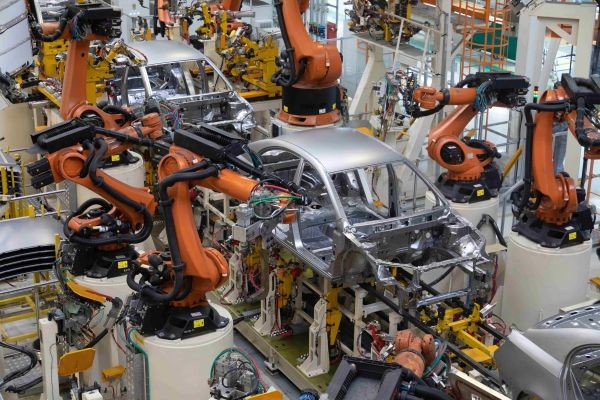
Manufacturing: Assisting in assembly lines, reducing human fatigue.
Retail: Serving customers, stocking shelves, and providing information.
Healthcare: Supporting elderly care, rehabilitation, and logistics in hospitals.
Why EV Makers?
EV companies already have:
Advanced AI expertise from autonomous driving research.
Strong manufacturing capabilities to scale production.
Capital and ambition to diversify into new markets.
This unique combination makes them well-positioned to lead the humanoid robotics revolution.
Looking Ahead
By 2030, humanoid robots could become as common as electric cars are today. With Xpeng’s Iron winning praise from Tesla CEO Elon Musk, the industry is signaling that humanoid robots are not science fiction anymore—they’re a strategic reality.
The next decade may see EV makers redefine themselves not just as car companies, but as leaders in human-robot coexistence, shaping how we work, shop, and live.