
The Art of Chinese Calligraphy: Philosophy, Discipline, and Beauty
Introduction
Chinese calligraphy, practiced for thousands of years, is one of the most revered art forms in East Asia. It is not simply about forming characters—it is about expressing the spirit, rhythm, and harmony of life itself. Each brush stroke carries meaning, reflecting the artist’s inner world and the philosophical traditions that shaped Chinese culture.
Historical Roots
Origins: Calligraphy dates back to the Shang Dynasty (1600–1046 BCE), when early pictographs evolved into structured scripts.
Evolution: Over centuries, five major script styles emerged: Seal Script (Zhuanshu), Clerical Script (Lishu), Regular Script (Kaishu), Running Script (Xingshu), and Cursive Script (Caoshu).
Golden Age: The Tang and Song dynasties elevated calligraphy into a scholarly pursuit, linking it to poetry, painting, and philosophy.
Philosophy in Brush Strokes
Daoist influence: Calligraphy emphasizes natural flow and spontaneity, mirroring Daoist ideals of harmony with nature.
Confucian discipline: Precision and structure reflect Confucian values of order, respect, and moral cultivation.
Zen aesthetics: Simplicity and emptiness in strokes embody Buddhist notions of mindfulness and transcendence.
Inner cultivation: Practicing calligraphy is seen as a way to refine the mind, balancing discipline with creativity.
Discipline and Technique
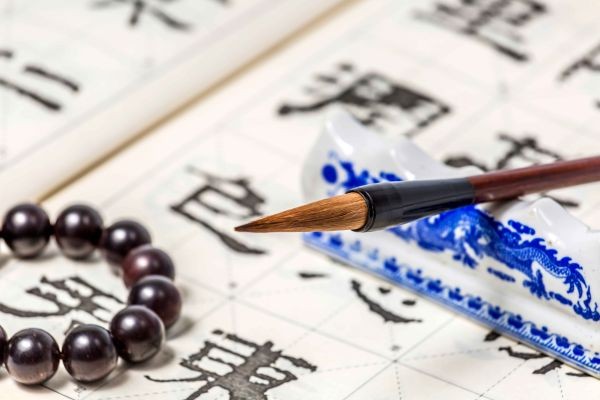
The Four Treasures: Brush, ink, paper, and inkstone are essential tools, each requiring mastery.
Control and patience: A single stroke demands steady breathing, posture, and concentration, making calligraphy both a physical and mental discipline.
Practice as meditation: Repetition of characters is not mechanical—it is a meditative act that cultivates patience and focus.
Beauty and Aesthetic Expression
Balance and rhythm: The interplay of thick and thin lines, fast and slow movements, creates visual harmony.
Expressive individuality: No two calligraphers write alike; each artist’s personality shines through their strokes.
Art beyond words: Even when characters are unreadable, the abstract beauty of the brushwork captivates viewers.
Modern Influence
Contemporary artists blend traditional calligraphy with digital art, design, and fashion, keeping the practice alive in new forms.
Calligraphy remains a cultural heritage taught in schools, celebrated in exhibitions, and practiced worldwide as a bridge between past and present.
Conclusion
Chinese calligraphy is a profound art where philosophy, discipline, and beauty converge in every brush stroke. It is not just about writing—it is about cultivating the self, expressing harmony, and preserving a timeless cultural tradition.