
China’s environmental beauty lies in its breathtaking diversity—from misty karst mountains and crystal-clear lakes to vast deserts and lush forests. The country’s landscapes are a living tapestry of natural wonders shaped by thousands of years of history and culture.
The Environmental Beauty of China
Majestic Mountains & Peaks
Zhangjiajie National Forest Park: Famous for its towering sandstone pillars, often shrouded in mist, these peaks inspired the floating mountains in the movie Avatar.
Mount Everest (Qomolangma): On the border of Tibet and Nepal, it is the world’s highest peak and a symbol of natural grandeur.
Huangshan (Yellow Mountain): Known for its “sea of clouds,” twisted pine trees, and dramatic granite cliffs, it has been celebrated in Chinese art for centuries.
Rivers, Lakes & Gorges
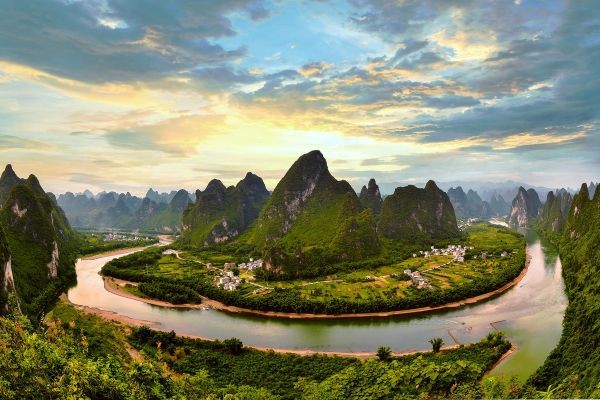
Li River in Guilin: Its karst scenery, with green peaks rising from the water, is one of the most iconic landscapes in China.
Jiuzhaigou Valley: A UNESCO World Heritage Site in Sichuan, it features turquoise lakes, waterfalls, and snow-capped mountains.
Tiger Leaping Gorge: One of the deepest gorges in the world, carved by the Jinsha River, offering dramatic views and adventurous trails.
Forests, Grasslands & Deserts
Inner Mongolia Grasslands: Vast open plains dotted with yurts and wildflowers, showcasing China’s pastoral beauty.
Yarlung Tsangpo Canyon: The deepest canyon in the world, surrounded by lush forests and rare wildlife.
Taklamakan Desert: Known as the “Sea of Death,” its golden dunes contrast sharply with the oases and Silk Road heritage sites nearby.
Cultural Harmony with Nature
Traditional Chinese gardens, such as those in Suzhou, reflect the philosophy of harmony between humans and nature.
Ancient poets and painters often drew inspiration from landscapes like the Yangtze River and West Lake in Hangzhou, embedding natural beauty into cultural identity.
Final Thoughts
China’s environmental beauty is a blend of extremes—towering peaks, serene rivers, endless deserts, and lush valleys. Each region offers a unique glimpse into the country’s natural heritage, making China not only a land of cultural richness but also one of the most visually stunning environments on Earth.