
Introduction
China has steadily risen as a global space power, with the China National Space Administration (CNSA) unveiling a series of missions that will shape the future of space exploration. By 2030, China aims not only to expand its scientific reach but also to establish itself as a leader in human spaceflight and planetary science.
Human Lunar Mission by 2030
China is on track to land astronauts on the Moon by 2030, marking the nation’s first crewed lunar mission.
The Long March-10 rocket has already undergone successful testing, designed to carry astronauts and heavy payloads to the lunar surface.
This mission will be a historic milestone, positioning China as the second country after the U.S. to achieve crewed lunar landings.
Four Major Science Missions (2026–2030)
As part of its 15th Five-Year Plan (2026–2030), CNSA has announced four flagship missions:
Earth 2.0 Observatory: A mission to search for exoplanets similar to Earth, advancing the hunt for habitable worlds.
Lunar Radio Telescope: A telescope on the far side of the Moon to study cosmic radio waves shielded from Earth’s interference.
Solar Mission: Focused on observing solar activity and its impact on Earth’s climate and space weather.
X-ray Observatory: Designed to study black holes, neutron stars, and other high-energy cosmic phenomena.
These missions highlight China’s ambition to push the boundaries of astrophysics and planetary science.
Tiangong Space Station Expansion
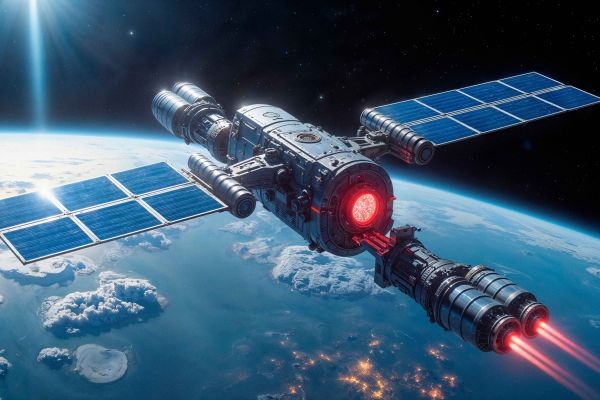
The Tiangong space station, already operational, will continue to expand with new modules and international collaborations.
By 2030, Tiangong is expected to serve as a long-term platform for microgravity research, Earth observation, and astronaut training.
Strategic Vision
China’s roadmap demonstrates:
Scientific leadership in astrophysics and planetary exploration.
Geopolitical influence by offering partnerships to countries without independent space programs.
Technological innovation through rockets like Long March-10 and advanced observatories.
Conclusion
By 2030, China’s space program will have achieved human lunar landings, groundbreaking astrophysical missions, and expanded orbital infrastructure. These efforts not only elevate China’s role in global space exploration but also contribute to humanity’s collective quest to understand the universe.