
Introduction
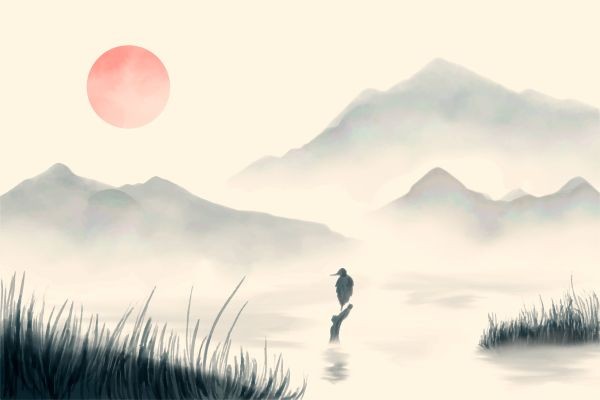
Chinese ink painting, or shuǐ mò huà (水墨画), is one of the most profound and enduring art forms in East Asia. With just a few brush strokes, artists capture the essence of landscapes, birds, and flowers, expressing not only external beauty but also the inner spirit of nature. Rooted in philosophy and simplicity, ink painting is less about realism and more about evoking mood, harmony, and timeless elegance.
Historical Roots
Origins: Emerging during the Tang Dynasty (618–907 CE), ink painting was closely tied to calligraphy, sharing tools and techniques.
Literati tradition: Scholar-artists of the Song and Yuan dynasties emphasized painting as a form of self-expression, often combining poetry, calligraphy, and imagery.
Minimalism: Unlike Western oil painting, Chinese ink painting values suggestion over detail, leaving space for imagination.
Nature as Inspiration
Landscapes (Shanshui): Mountains, rivers, and misty valleys symbolize the grandeur of nature and the harmony between humans and the cosmos.
Birds and flowers (Huaniao): Delicate depictions of plum blossoms, bamboo, cranes, and sparrows reflect resilience, purity, and joy.
Seasonal themes: Each motif carries symbolic meaning—plum blossoms for perseverance, lotus for purity, pine for longevity.
Spirit in Brush Strokes
Philosophical depth: Influenced by Daoism and Zen Buddhism, ink painting emphasizes emptiness, balance, and flow.
Qi (life force): Artists aim to capture the spirit-energy of their subject, not just its outward form.
Expressive simplicity: A single stroke can convey movement, vitality, and emotion, embodying the painter’s inner state.
Technique and Discipline
The Four Treasures: Brush, ink, paper, and inkstone are essential tools, requiring mastery and care.
Brushwork: Techniques range from bold, sweeping strokes for mountains to delicate, fine lines for feathers and petals.
Ink tones: Variations of black—from deep, saturated ink to light washes—create depth, atmosphere, and subtlety.
White space: Known as liubai (留白), empty space is as important as the painted areas, symbolizing openness and infinity.
Modern Influence
Contemporary artists blend ink painting with modern design, abstraction, and multimedia, keeping the tradition alive.
Exhibitions worldwide showcase ink art as a bridge between ancient philosophy and modern aesthetics.
Ink painting continues to inspire fashion, architecture, and digital art, proving its timeless relevance.
Conclusion
Chinese ink painting is a celebration of nature, spirit, and simplicity. With minimal strokes, it conveys profound meaning, inviting viewers to pause, reflect, and connect with the essence of life. More than an art form, it is a philosophy—an elegant reminder that beauty often lies in simplicity.