
Introduction
Space exploration is no longer the exclusive domain of a few nations. The China National Space Administration (CNSA), founded in 1993, has rapidly evolved into one of the world’s most influential space agencies. With a budget of over $18 billion in 2023 and multiple launch centers across China, CNSA is spearheading projects that rival NASA, ESA, and Roscosmos.
Key Achievements
Lunar Exploration (Chang’e Program): CNSA’s Chang’e missions have achieved milestones such as the first soft landing on the far side of the Moon (Chang’e-4, 2019) and successful sample return missions (Chang’e-5, 2020).
Mars Mission (Tianwen-1): In 2021, China became the second nation to land and operate a rover on Mars, marking a historic achievement.
Space Station (Tiangong): CNSA is building its own modular space station, Tiangong, which is expected to be fully operational by 2025, providing an alternative to the ISS.
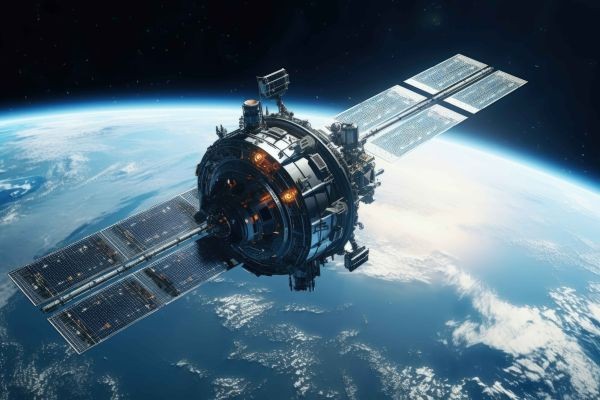
Satellite Programs: From Earth observation to navigation (BeiDou system), CNSA has developed a robust satellite infrastructure supporting both civilian and military applications.
International Collaboration
CNSA emphasizes global partnerships:
Joint missions with France (gamma-ray burst detection satellites).
Cooperation with the European Space Agency (ESA) on deep-space exploration.
Agreements with countries in Asia, Africa, and South America to share satellite data and launch services.
This collaborative approach positions China as a bridge-builder in space diplomacy, offering opportunities to nations that lack independent space programs.
Strategic Importance
Technological Leadership: CNSA’s rapid progress challenges the dominance of traditional space powers.
Geopolitical Influence: By offering launch services and satellite technology, China strengthens ties with developing nations.
Scientific Contributions: Missions like Chang’e and Tianwen provide valuable data for the global scientific community.
Future Outlook
CNSA’s roadmap includes:
Lunar base construction in collaboration with Russia by the 2030s.
Asteroid exploration and sample-return missions.
Deep-space probes targeting Jupiter and beyond.
Expansion of the BeiDou navigation system to rival GPS globally.
Conclusion
The role of CNSA in global space exploration is transformative. By combining ambitious missions, international cooperation, and strategic investments, China is not only securing its place among the top spacefaring nations but also reshaping the future of humanity’s journey beyond Earth.